There are a number of options to connect a Raspberry Pi to an stereo amplier but one option is to use a DAC hat card such as an IQAudio DAC with RCA jacks. With the hardware in place it's all about the software to library/index/serve your music and to provide a pleasant user experience to select/queue/control your music - this typically means to control your music via a IOS-based smartphone/tablet.
Sunday, 1 July 2018

Sunday, 17 June 2018
What's preventing spindown of disks on RPI?
I have a RPi3 with an external USB hardddisk attached which appeared to be not to be spinning down although the setup (via
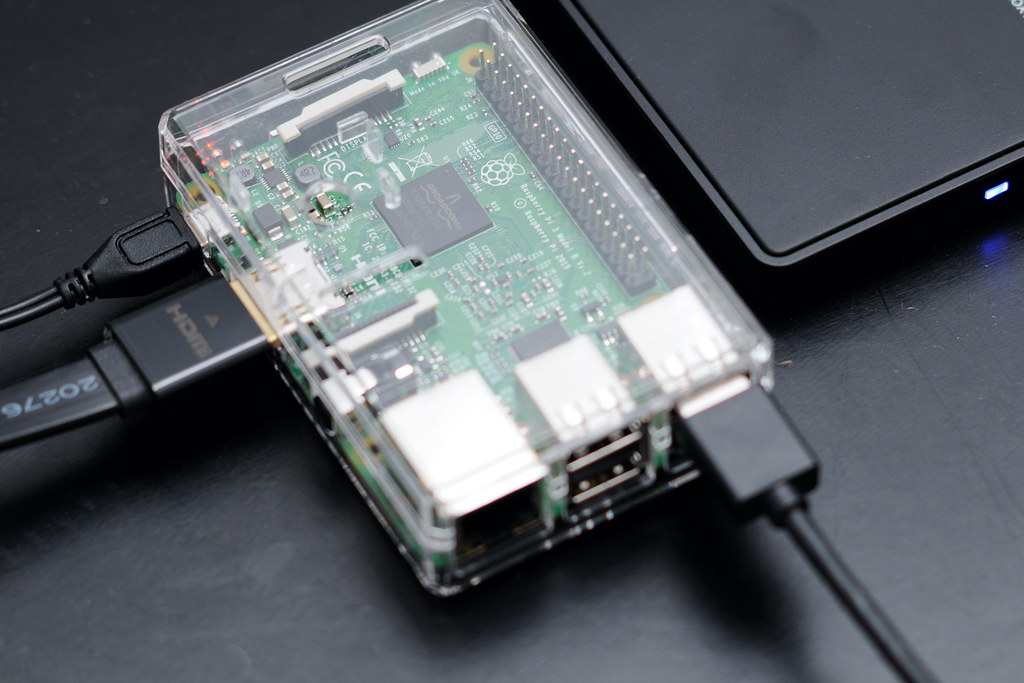
hdparm was correct. But how to determine what was the cause of activity to the disk?Sunday, 22 April 2018
Nikkor 24mm f/2.8 AI-S Disassembly
The Nikkor 24mm f/2.8 AI-S is a lens from the late 70s but shares its optical formula with its predecesors (pre-AI and AI) and successor (AF-D). The AI-S is also quite common and as such appears on ebay frequently in various conditions.

The 24mm f/2.8 AI-S lens is reasonably simple to disassemble and teardown with the only complication being the CRC unit at the rear.
The 24mm f/2.8 AI-S lens is reasonably simple to disassemble and teardown with the only complication being the CRC unit at the rear.
Sunday, 8 April 2018
ffmpeg and Nvidia GTX hardware encoding
ffmpeg video processing on an old linux/machine, like a i7 860, running Fedora26 can be painful if you only rely on the CPU. With a recent Nvidia card supporting NVENC (GeForce 6/7/8/10.x) ffmpeg can be compiled directly to support these cards.
Saturday, 10 February 2018
Another Well Regarded Legacy: Nikkor 28mm f/2.8 AI-S
The 28mm f/2.8 AI-S is a well regarded lens from the early 1980s that is still available new today. But what's the point of this compared to, say a 24-70mm f/2.8 zoom? And how does it fair for use as a walk-about or an environmental portrait lenses at/near wide open (f/2.8..f/5.6) apertures?

28mm f/2.8 AI-S
28mm f/2.8 AI-S
Saturday, 2 December 2017
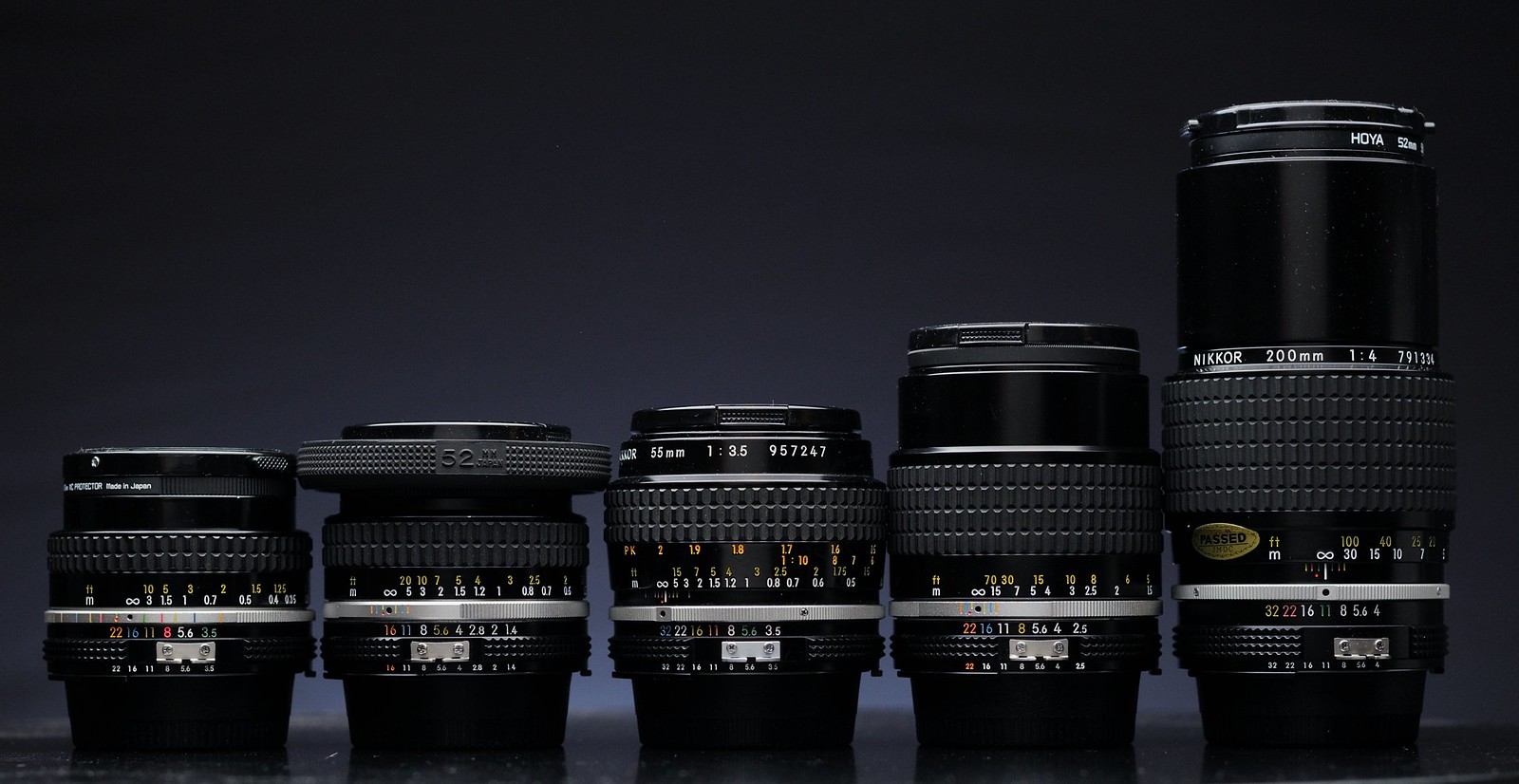
How to distinguish AI and AI-S lenses
The old time manual Nikkors from circa 1977 had the designation of an AI lens and then sometime leading into 1981 the AI-S lenses replaced the AI; both AI and AI-S lenses will fit onto all modern day Nikon F-mount bodies with no issues and the lens are functionally identical.
With the release of the AI-S lenses however, there were some subtle changes external to the lens: the primary reason for AI-S was to use enable cameras to use program or shutter priority modes - this was important for the upcoming release of cameras with this function at the time and the AI-S lenses were designed to facilitate this. With this said, the lenses that had a AI and then an AI-S counterpart were typically optically identical.
But why does this matter to be able to distinguish between an AI vs AI-S lens, if the optical formulas were the same?
With the release of the AI-S lenses however, there were some subtle changes external to the lens: the primary reason for AI-S was to use enable cameras to use program or shutter priority modes - this was important for the upcoming release of cameras with this function at the time and the AI-S lenses were designed to facilitate this. With this said, the lenses that had a AI and then an AI-S counterpart were typically optically identical.
But why does this matter to be able to distinguish between an AI vs AI-S lens, if the optical formulas were the same?
Saturday, 25 November 2017
Going Long: Nikkor 200mm f/4 AI
A 200mm can be a useful focal length in the bag, albiet a less frequently used length. However the modern and autofocusing xx-200mm zooms are heavy and expensive and therefore options to satisfy the 200mm can be better sourced from the legacy Nikkor AI/AIS catalog.

Sunday, 12 November 2017
Going Wide(ish): Nikkor 20mm f/3.5 AI
The circa 1980 Nikkor 20mm f/3.5 AI lens comes with a reputation for being flare resistant and reasonably sharp as well as being very lightweight.

Nikon have failed to produce a (effective) wide and lightweight prime for their DX systems and the 20mm f/3.5 AI can potentially fill this gap (giving a 35mm equivalent FOV of 30mm) with the added benefit that the lens would not overlap with any 24-70mm focal lengths.
Nikon have failed to produce a (effective) wide and lightweight prime for their DX systems and the 20mm f/3.5 AI can potentially fill this gap (giving a 35mm equivalent FOV of 30mm) with the added benefit that the lens would not overlap with any 24-70mm focal lengths.
Wednesday, 19 July 2017
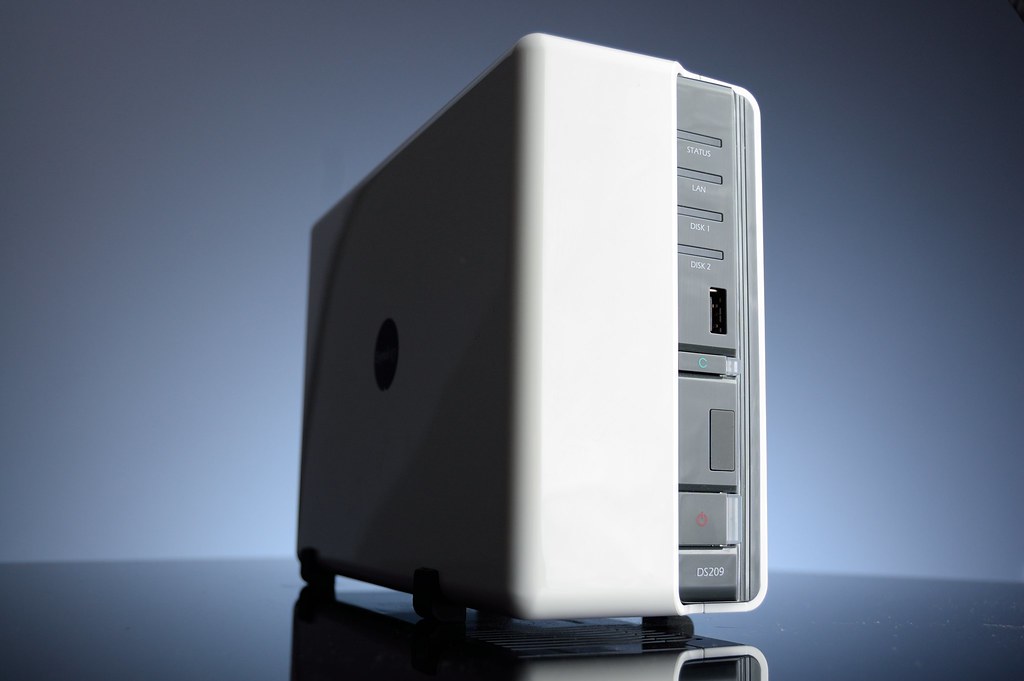
Upgrading Synology DS209 storage
As with all storage, there comes a time where you exhaust the storage and you need to move up. After many years of service, the disks in my Synology NAS need to upgraded and we'll see how we can repurpose the existing disks - but as you'd expect, there's a few bumps to be aware along the way.
Sunday, 18 June 2017
Orico USB3.0 enclosure inactivity/disconnect fix
Many hardware (especially cheap) vendors will sell the same product but replace and gut the internal electronics. This makes finding compatible/previously successful devices a PITA. One such recent example is a cheap Orico external USB 3.0 enclosure for 2.5" harddisks that is readily available on place such as Amazon.
Wednesday, 15 February 2017
Smallest hostap RPi setup
The original 2011 Raspberry Pi model B (rev1) with its 256MB is dwarfed by it's younger siblings now but this can still be used a very cost effective board for projects such as a portable wifi access point.
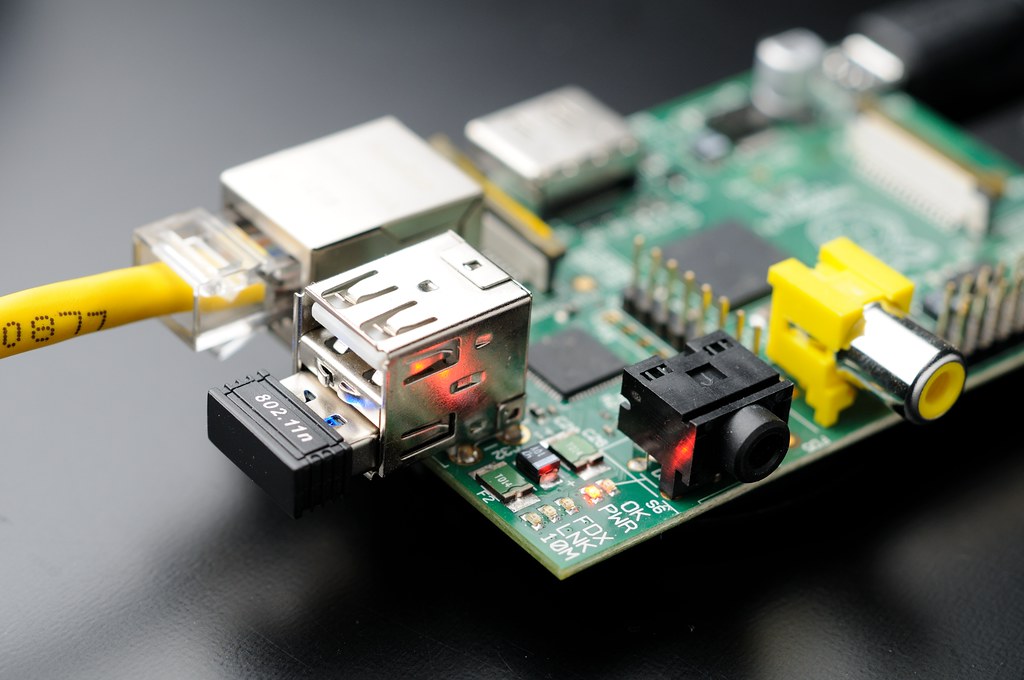
Whilst this use case is nothing new, trying to create an access point with the smallest SD card sizes can cause a few problems.
Whilst this use case is nothing new, trying to create an access point with the smallest SD card sizes can cause a few problems.
Sunday, 12 February 2017
Simple Web monitor/maintanence for RPi
Basic maintanence and monitoring for your RPi can obviously be achieved by
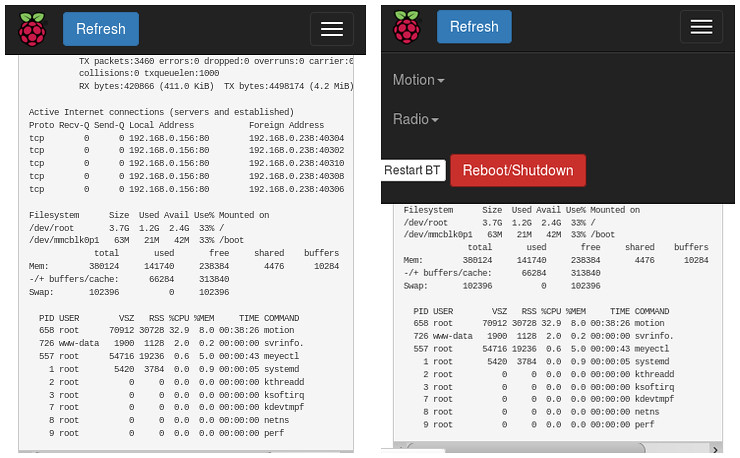
ssh into the machine but sometimes there needs to be an easier way.Saturday, 4 February 2017
RPi: bonding network interfaces
One of the big advantages of the Raspberry Pi is that it's form factor makes it so portable; I can have a RPi moved around the home depending on what I need at the time but it does mean I need to worry about which network interface is available to the RPi without having to log into the RPi, reconfigure to/from wifi to/from ethernet etc..

Friday, 30 December 2016
Setting up a RPi Zero
After jumping on the Raspberry Pi bandwagon, I wondered what could be done with the smallest/stripped down version of the RPi, the RPi Zero.
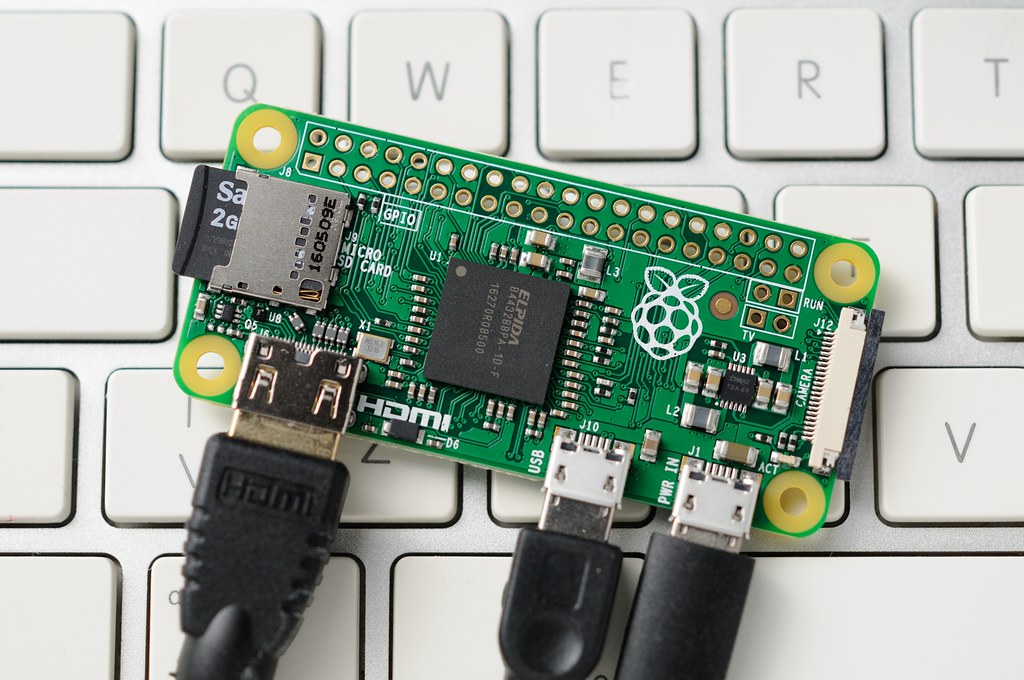
But with many things, theres always hurdles to overcome.
But with many things, theres always hurdles to overcome.
Saturday, 26 November 2016
Booting physical Windows 10 installation/partition using VMware
No messing around: setting up VMware to boot a physical Windows 10 installation from a (GPT) partition from Linux.
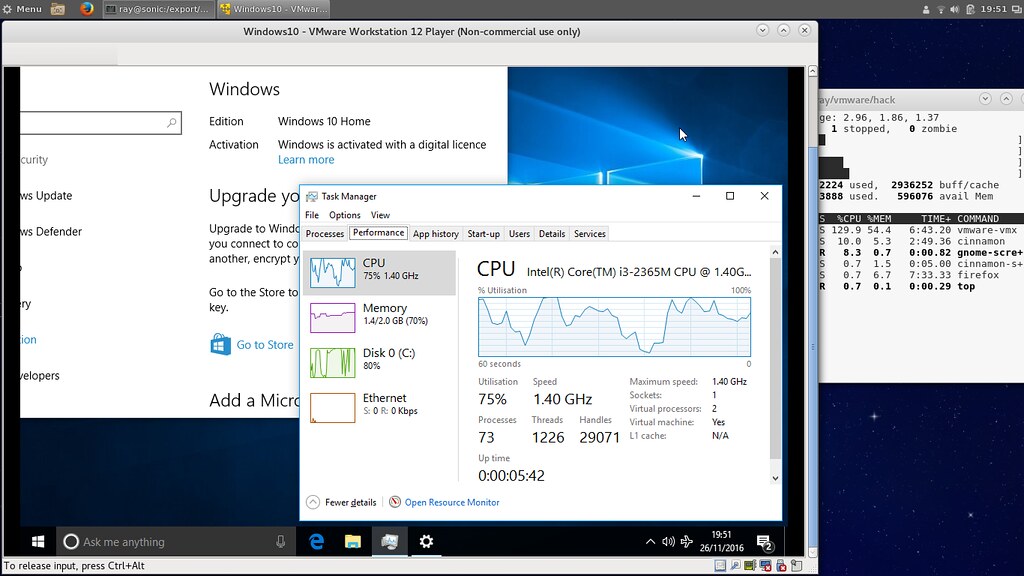
physical installation of Windows 10 running under VMplayer 12.5 on Fedora 24
physical installation of Windows 10 running under VMplayer 12.5 on Fedora 24
Sunday, 13 November 2016
Fedora 24 on Asus x202e/s200e-CT216
Recent successes in installing Fedora on a 2010 HP netbook and running virtualised WinXP and iTunes reminded me why I used to be a geek.
Whlist the HP netbook served its original purpose, of being a reasonably portable travel backup system, running applications such as VMware and then MS Word/iTunes on its limited 10"/1024x600 screen size started to be annoying. And during a bored conference call, I wondered if there was something a little bigger for my new requirement.
Yes indeed any recent ultrabook/MacAir would be satisfactory but the price point is ridiculous for something that would supplementary. So again, older machines were considered and the Asus s200/x202e became the front runner.
Whlist the HP netbook served its original purpose, of being a reasonably portable travel backup system, running applications such as VMware and then MS Word/iTunes on its limited 10"/1024x600 screen size started to be annoying. And during a bored conference call, I wondered if there was something a little bigger for my new requirement.
Yes indeed any recent ultrabook/MacAir would be satisfactory but the price point is ridiculous for something that would supplementary. So again, older machines were considered and the Asus s200/x202e became the front runner.
Sunday, 6 November 2016
Sunday, 30 October 2016
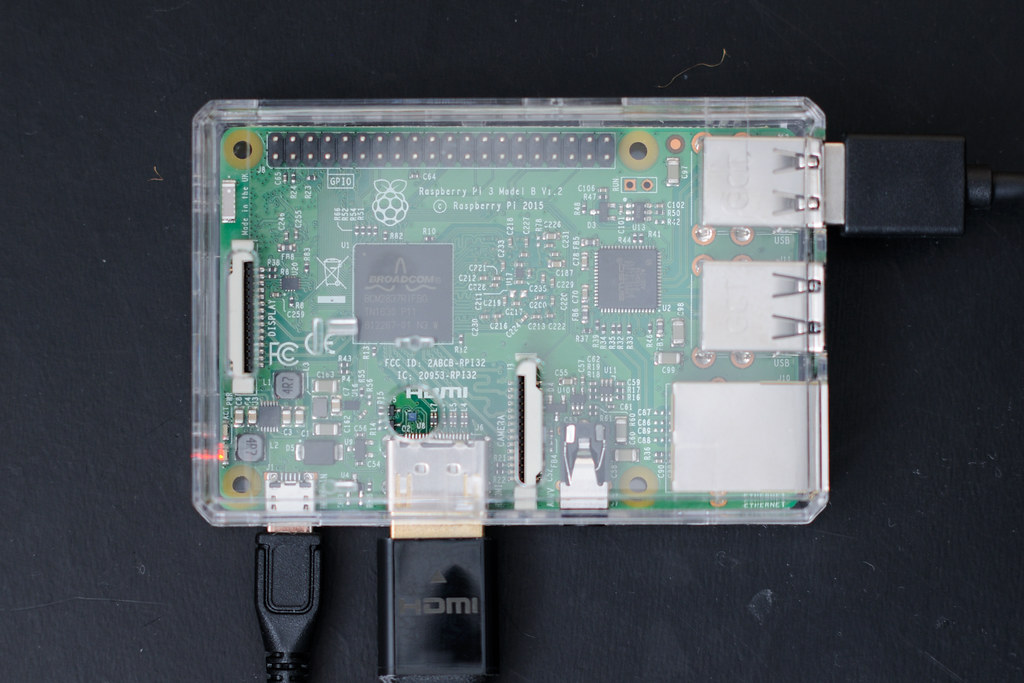
RPi3 media server with Volumio and Kodi
I have most my music now ripped to mp3/flac but these either live on my iPhone or on a NAS .. playing them easily through a proper amplifier/speakers has been an obsession of mine for many years. Recently, I discovered that the RPi3 could be enhanced with RPi DAC boards which meant a new avenue to explore.
Saturday, 15 October 2016
VM'ing: Copy music to/from IOS from Linux via VMs
Recently I've needed to spend more time using the Fedora installation on my aging 2010 Dell Vostro however I've found various occasions where I wanted to copy music files to my iPhone/IOS 9.x/10.x devices from Linux.
In years gone by Linux's recommended options for IOS music management included
In years gone by Linux's recommended options for IOS music management included
gtkpod, banshee and rhythmbox but none of these options work with my iPhone and Fedora. With my current Fedora 24 installation and IOS 9.x/10.x the only option would be to run a virtualised OS that supported iTunes via VMware or VirtualBox.Saturday, 20 August 2016
Herman Miller Aeron: pitfalls of trying to buy second hand
The Herman Miller Aeron has been available on the market since 1994 and since then there have been a few subtle changes to the parts since then; the chairs have been referred to as the mark I (production runs from 1994 - ~ Aug 2004) and mark II (production after Aug 2004). All of this matters to avoiding some subtle pitfalls if you are looking at a second hand Aeron chair from various office clearance companies or ebay.
The chair has many options for configuring the type mesh and lumbar support but the main configuration that can't change involve the support for full front and rear tilts (fully loaded) or just rear tilt. The chair can also be configured to have no arms, fixed position arms or up/down adjustable arms: the arms can also be fixed or can be pivoted in 3 positions (in/out/middle).

Below are some of my experiences from trying to find my own Aeron chair, and subsequently fully refurbishing a 1999 chair, which may be useful to anyone trying to determine if an Aeron bargain is worth the risk.
The chair has many options for configuring the type mesh and lumbar support but the main configuration that can't change involve the support for full front and rear tilts (fully loaded) or just rear tilt. The chair can also be configured to have no arms, fixed position arms or up/down adjustable arms: the arms can also be fixed or can be pivoted in 3 positions (in/out/middle).
Below are some of my experiences from trying to find my own Aeron chair, and subsequently fully refurbishing a 1999 chair, which may be useful to anyone trying to determine if an Aeron bargain is worth the risk.
Subscribe to:
Posts (Atom)